
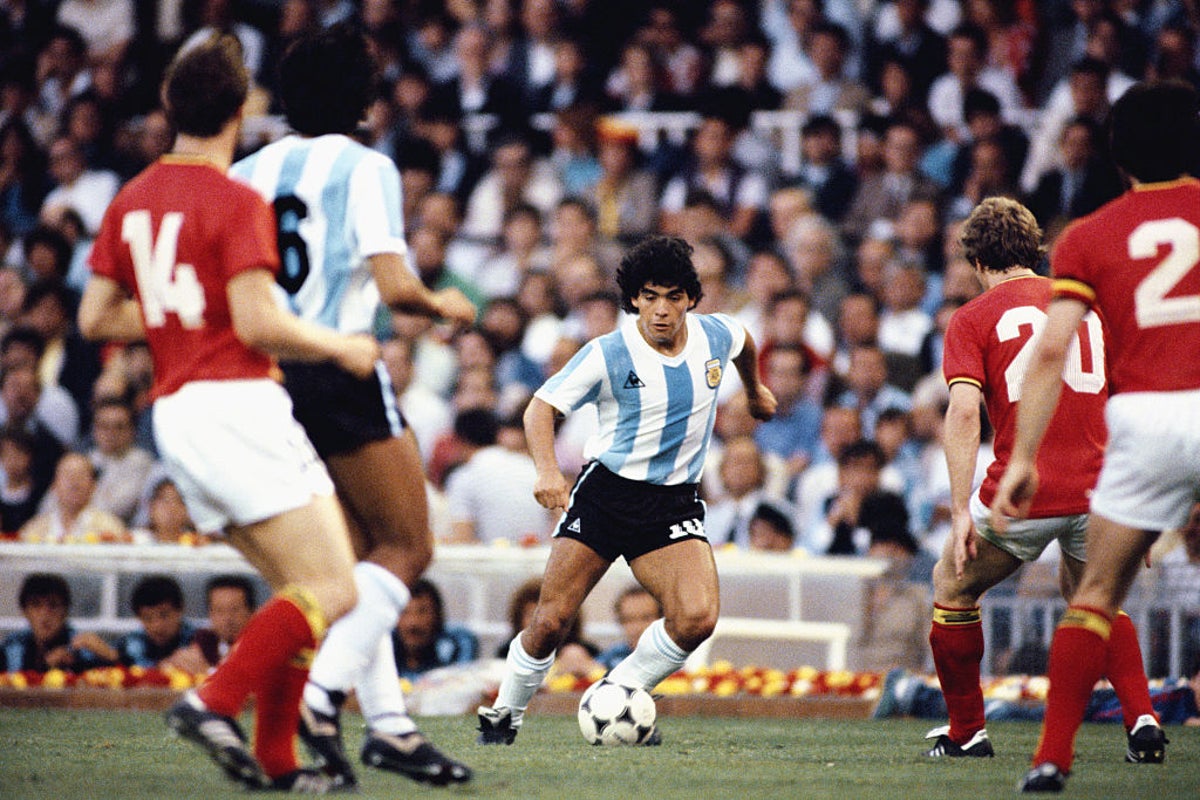

In soccer, memorable objectives are usually linked to the gamers who scored them. Few will be recalled with out point out of the person – and even the workforce – concerned.
But, two objectives in a single recreation 40 years in the past have attained that standing. One is understood universally because the “Hand of God,” and the opposite is extensively acknowledged because the “Aim of the Century.” Each have been scored by Argentine star Diego Maradona towards England within the quarterfinal of the FIFA World Cup at Mexico Metropolis’s Azteca Stadium on June 22, 1986.
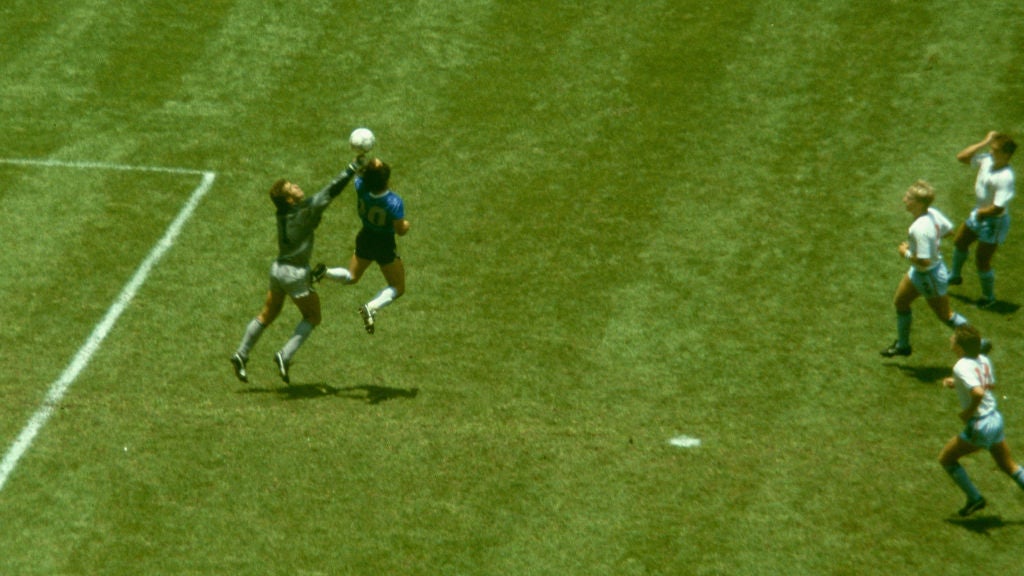
The objectives, scored simply minutes aside, are amongst a handful which can be instantly acknowledged a long time later – they usually maintain particular resonance in Argentina. Their perceived significance was such that when in 2012 Argentine President Cristina Fernández de Kirchner inaugurated a “Gallery of Well-liked Idols” at Casa Rosada, the nation’s presidential palace, the exhibit included images of each objectives.
But it surely was the “Hand of God” that stood out, with the long-lasting seize of Maradona’s outstretched arm punching the ball over England goalkeeper Peter Shilton positioned entrance and middle, leaping out at guests.
A yr after the Gallery of Well-liked Idols was put in, I toured it with a gaggle of worldwide faculty college students from a study-abroad program led by my spouse. Realizing that I used to be a thinker of sport, members of the group requested me an moral query: Why was a objective scored illegally – it ought to have been disallowed as an apparent handball – given such prominence within the presidential palace? The identical could possibly be requested of the place it holds within the Argentine consciousness now, with the picture frequent in murals, T-shirts and in songs.
As I defined to the scholars, to grasp why that recreation and people objectives by Maradona – of the 34 he scored for the nationwide workforce – have turn into so entrenched within the Argentine creativeness, it’s essential to mirror on the complicated historical past of Anglo-Argentine relations.
Anglo-Argentine relations
From the late sixteenth century onward, Britain sought to increase its empire into South America, primarily to increase the markets for its merchandise elsewhere.
After failed makes an attempt to invade Buenos Aires in 1806 and 1807, Britain performed a key position in Argentina’s independence from Spain just a few years later. All through the remainder of the nineteenth century and the early twentieth century, Britain had a serious presence within the Argentine economic system. So massive was the funding and so quite a few the British expatriate group that Argentina was described as Britain’s “Sixth Dominion.” Soccer, by means of this group, turned a consuming ardour of Argentines, too.
Nonetheless, the connection was at instances antagonistic. A protracted-running level of competition was over a gaggle of islands 300 miles off the South American coast, referred to as the Falkland Islands in the UK and Islas Malvinas in Argentina.
Britain has occupied the islands since 1833, and Argentina has claimed them as its personal ever since. Constructing pressure gave option to battle in 1982, when Argentina, then below a brutal dictatorship, despatched a navy expedition to the islands.
Britain’s decisive response shattered the Argentine foray. Dropping the battle was a traumatic expertise for Argentina, however one which proved an essential step within the nation’s eventual return to democratic rule the next yr.
Maradona’s World Cup
Relations between the 2 international locations have been nonetheless tense when Argentina and England confronted off in the course of the 1986 World Cup. Diplomatic ties had not but resumed, and lots of in Argentina perceived the sport as a chance to honor the conscripts who died within the battle and remind the world of the nation’s declare to the Malvinas/Falkland Islands.
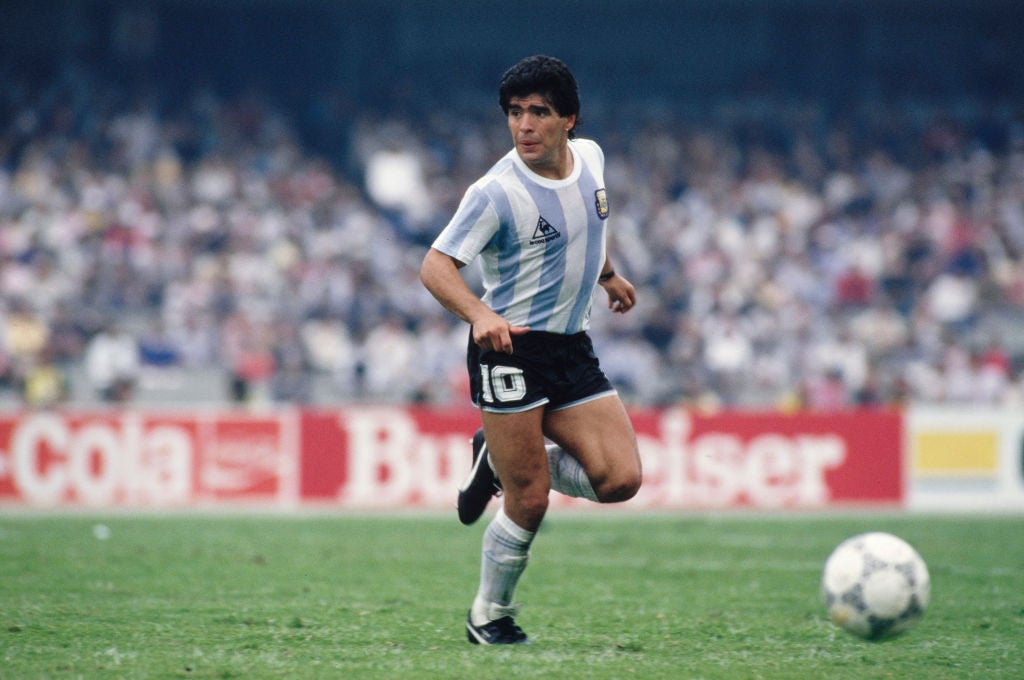
It was a recreation charged with intricate political and historic connotations. And Argentina entered it with the best participant of the age in Diego Maradona.
As Eduardo Galeano, referred to as soccer’s international poet laureate, wrote in 1995: Mexico ’86 “was Maradona’s World Cup.”
“With two lefty objectives towards England, Maradona avenged the wound to his nation’s delight inflicted within the [Malvinas/]Falklands battle: the primary he transformed along with his left hand … and the opposite along with his left foot, after having despatched the English defenders to the bottom,” Galeano famous.
Within the house of simply 5 minutes, Maradona lifted his nation and was elevated to the standing of an idol amongst idols. After the sport, as controversy over the primary objective swirled, Maradona, following the cue of a journalist, agreed that it will need to have been scored by the “Hand of God.”
Whereas the second objective was the incarnation of soccer magnificence, the imagery surrounding the primary made it equally if no more iconic.
That Argentina went on to win the championship solely added to Maradona’s imperishable reputation, it doesn’t matter what he did. His loss of life on Nov. 25, 2020, triggered a wave of mourning in Argentina and world wide.
All that’s good within the recreation
Again on the presidential palace, the scholars pressed me about how I and others ought to really feel in regards to the “Hand of God.” My reply, echoing philosophical arguments I made in a chapter I wrote for a e-book co-edited with thinker Daniel G. Campos, went as follows.
Context issues for understanding the which means that many in Argentina ascribed to that objective. Nonetheless, context can’t justify it.
Soccer is a social follow regulated by guidelines and what philosophers name “inner items” – intrinsic rewards that come from taking part in an exercise. Soccer’s inner items not solely outline the sport but in addition characterize the inspiration for its requirements of excellence. They comprise what are referred to as “constitutive” and “restorative” abilities that the game is supposed to check.
Constitutive abilities are these carried out throughout open play and embody dribbling, passing and taking pictures the ball, and opening up areas. Restorative abilities are employed when a recreation is interrupted and embody the flexibility to take penalty and nook kicks, amongst others.
Due to its construction, in soccer these units of abilities are clearly associated to other ways to manage and strike the ball with one’s toes.
A soccer genius … and a case of dishonest
Scoring objectives with one’s hand is neither a constitutive nor a restorative talent of soccer. As an alternative, it’s an “extra-lusory talent” – that’s, one not meant to be examined and thus doesn’t legitimately belong within the recreation.
Actually, scoring a objective with one’s fingers contradicts and dishonors the interior items that outline soccer and its requirements of excellence. On this sense, the “Hand of God” downgrades the competency by which gamers distinguish themselves.
Moreover, it’s an unambiguous case of dishonest. Maradona deliberately and surreptitiously violated a rule of the game to acquire a bonus that he wouldn’t have obtained in any other case – it distorts the game, spoils the end result and disrespects the opposing workforce.
It mustn’t, as such, be inspired or celebrated. Quite, it ought to be condemned.
Worse, it attracts consideration away from the form of play that Maradona, who was subjected to repeated fouling by the English gamers all through the sport, embodied within the second objective. Certainly, soccer is honored and prospers with that form of play.
Concerning the creator
Cesar R. Torres is an Affiliate Professor of Kinesiology and Philosophy at Penn State. This text was first printed by The Dialog and is republished below a Artistic Commons licence. Learn the authentic article.
Over the course of a 60-yard run, Maradona danced previous opponents, escaped challenges and left English defenders helpless earlier than beating the goalkeeper with a medical end. Journalist Brian Glanville described it in 1993 as “astounding, a objective so uncommon, nearly romantic.” He added: “It hardly belonged to so apparently rational and rationalized an period as ours.”
That objective is arguably probably the most celebrated objective in World Cup historical past.
Forty years after that epochal recreation between Argentina and England, I counsel that Argentina and the world of soccer ought to in a single breath condemn the scandalous “Hand of God” and rejoice within the chic “Aim of the Century” – whereas by no means forgetting the context wherein the 2 objectives occurred.